




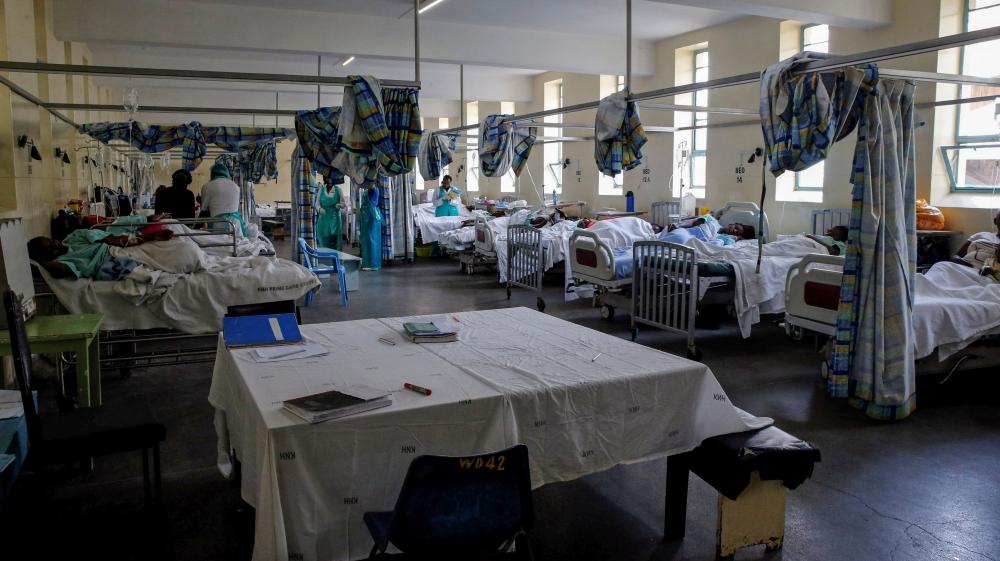
There is a strange silence that echoes through a hospital ward when there are not enough nurses.
It is not the peaceful kind. It is heavy. Uneasy. Dangerous.
There is also a different kind of silence in a classroom with an overworked, underpaid teacher.
It is not the silence of learning. It is the silence of neglect.
And then—far removed from both—is the loud, uninterrupted hum of privilege inside Parliament. Phones ringing. Allowances flowing. Decisions being made… about people whose lives feel increasingly like afterthoughts.
This is the contradiction at the heart of our nation.
The Budget That Never Reaches the Bedside
We are told, time and time again, that there is no money.
No money for doctors.
No money for nurses.
No money for Junior Secondary School (JSS) teachers earning KSh 17,000—an amount that barely sustains survival, let alone dignity.
We are told to be patient. To understand. To endure.
But patience has become the currency of the powerless.
Because somehow—miraculously—there is always money for those in power.
The Salaries and Remuneration Commission (SRC) tightens its belt when it comes to essential workers, but loosens it generously for Members of Parliament. The same system that pleads poverty at the hospital door opens a banquet hall in the corridors of power.
And so the question grows louder:
Is the problem really lack of money—or lack of priorities?
Airtime vs. Lifelines
Consider this: a single monthly airtime allowance of KSh 25,000 for the Speaker of the National Assembly, Moses Wetang’ula.
Airtime.
Not emergency care. Not textbooks. Not salaries for those shaping minds and saving lives.
Just airtime.
It is more than what a JSS teacher earns in an entire month.
Let that sink in.
One conversation allowance outweighs a month of shaping futures.
One convenience surpasses a month of sacrifice.
It is not just an economic imbalance—it is a moral one.
The Quiet Heroes We Keep Asking to Wait
Doctors are told to “hold on” as they work double shifts in under-equipped hospitals.
Nurses are asked to stretch themselves thin across wards that demand more than humanly possible.
Teachers stand before crowded classrooms, carrying not just lesson plans, but the weight of a nation’s future.
And still, they are told:
“Wait for better economic times.”
But better times seem to arrive selectively.
They arrive for allowances.
They arrive for perks.
They arrive for those already comfortable.
They do not arrive for the exhausted nurse who skips meals to make ends meet.
They do not arrive for the teacher who walks into class knowing their salary cannot sustain their own family.

When a Nation Loses Its Compass
A country reveals its soul not in its speeches, but in its spending.
When a nation values airtime over education, it is not just mismanaging funds—it is misplacing its future.
When indulgence outweighs healthcare, it is not just poor planning—it is a quiet surrender of human dignity.
Because education is not an expense.
It is an investment.
Healthcare is not a burden.
It is a foundation.
Yet somehow, those who uphold these pillars are treated as liabilities, while those who legislate are treated as royalty.
The Dangerous Normalization of Inequality
What makes this situation even more troubling is how normal it has begun to feel.
We shrug.
We adapt.
We move on.
But inequality that becomes normal is inequality that becomes permanent.
A teacher earning less than a politician’s airtime should not be a statistic—it should be a national emergency.
A nurse fighting for fair pay should not be seen as disruptive—it should be seen as defending the very right to care.
A Question That Refuses to Go Away
So we must ask—honestly, boldly, relentlessly:
What kind of country are we building?
One where power feeds itself first?
Or one where service is truly honored?
Because a nation cannot outsource its conscience.
Not to commissions.
Not to policies.
Not to speeches.
The Choice Ahead
This is not just about budgets.
It is about values.
It is about deciding whether the hands that heal and the minds that teach are worth more than the voices that debate.
Because in the end, history will not remember how much airtime was allocated.
It will remember whether the sick were treated.
Whether the children were taught.
Whether the nation chose people over privilege.
And right now, that choice is still being written.
