





The Science of Expertise According to Anders Ericsson
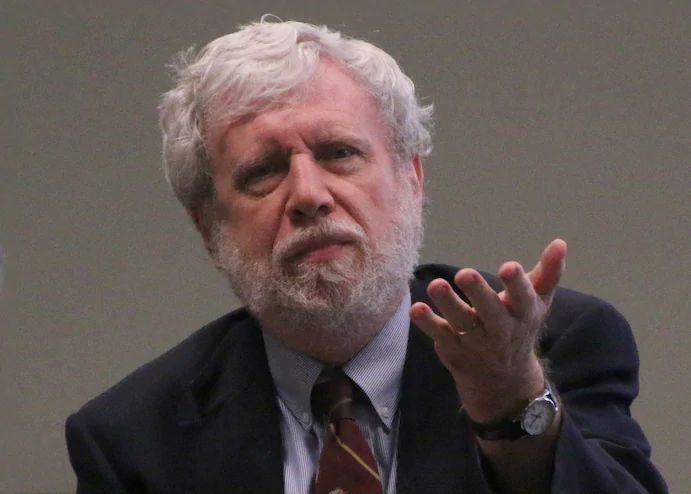
In a world obsessed with overnight success stories, viral sensations, and the myth of the “gifted prodigy,” the work of psychologist Anders Ericsson stands as a refreshing antidote. Ericsson, a pioneering figure in cognitive psychology, dedicated his career to demystifying how ordinary people become extraordinary experts. His research, spanning decades and influencing fields from sports to music to business, reveals that expertise isn’t a mysterious gift from the gods—it’s a science, rooted in deliberate, structured effort. This article dives deep into Ericsson’s perspective, exploring its core principles, real-world applications, misconceptions, and why it matters more than ever in our fast-paced, skill-demanding society. We’ll weave in stories, analogies, and examples to make this journey as engaging as a thriller novel, because understanding expertise isn’t just academic—it’s a blueprint for personal transformation.
The Foundation: Deliberate Practice as the Cornerstone
At the heart of Ericsson’s science is **deliberate practice**, a term he coined to describe the engine driving expertise. Imagine expertise as a towering skyscraper: innate talent might provide a slight foundation boost, but deliberate practice is the steel beams, concrete, and relentless construction crew that builds it floor by floor.
Deliberate practice isn’t your casual weekend hobby—it’s intense, focused, and uncomfortable. It involves setting specific, measurable goals, like a basketball player not just shooting hoops but targeting their weak left-hand layup under pressure. Feedback is crucial; without it, you’re driving blindfolded. A coach, mentor, or even advanced self-tracking tools provide that mirror, highlighting flaws and guiding improvements. Ericsson’s studies showed that experts in violin playing, for instance, didn’t just practice more—they practiced *better*, isolating tricky passages and repeating them with variations until perfection.
To make this vivid, consider the story of a hypothetical aspiring novelist named Alex. Alex doesn’t just write daily; they dissect bestselling books, analyze sentence structures, seek brutal critiques from writing groups, and rewrite chapters focusing on pacing or dialogue. Over the years, this deliberate grind has turned raw ideas into polished masterpieces. Ericsson’s research, drawn from observing chess masters, surgeons, and musicians, proves this isn’t anecdote—it’s data-backed science.
The Mythical 10,000 Hours: Time, Quality, and the Long Haul
Popularized (and somewhat distorted) by Malcolm Gladwell in his book *Outliers*, the “10,000-hour rule” stems from Ericsson’s findings in a 1993 study on violinists at Berlin’s Academy of Music. The top performers had accumulated about 10,000 hours of deliberate practice by age 20, compared to less for their peers. But Ericsson always emphasized: it’s not a magic number. Quality trumps quantity every time.
Think of it like brewing the perfect coffee. Dumping 10,000 beans into a grinder won’t yield espresso gold—it’s the precise grind, temperature, and timing that matter. In expertise, those hours must push boundaries. Ericsson noted that many professionals plateau after a few years because they switch to “autopilot” mode, repeating familiar tasks without challenge. A doctor with 20 years of experience might not be an expert if they’ve coasted on routine cases; true mastery comes from tackling complex surgeries with ongoing training.
This perspective flips the script on aging and learning. Ericsson’s work shows adults can achieve expertise later in life, as long as they commit. Take Julia Child, who didn’t start cooking seriously until her 30s but became a culinary icon through deliberate experimentation and feedback from French masters. In today’s gig economy, where careers pivot rapidly, this is empowering: expertise is accessible, not age-locked.
Mental Representations: The Expert’s Secret Superpower
One of Ericsson’s most fascinating insights is how experts develop **mental representations**—intricate cognitive frameworks that let them perceive and process information at superhuman speeds. It’s like upgrading from a basic smartphone to a quantum computer.
For a chess grandmaster, the board isn’t 64 squares; it’s a dynamic web of strategies, with patterns recognized in milliseconds from thousands of practiced games. Ericsson’s experiments demonstrated that experts have superior working memory in their domain— a pianist recalls complex scores effortlessly, but struggles with random number sequences like anyone else.
Picture a detective in a crime novel: while amateurs see chaos at a scene, the expert spots subtle clues because their mental model filters noise. In business, a seasoned CEO anticipates market shifts not by luck, but through representations built from deliberate analysis of past trends. Ericsson’s science here draws from cognitive psychology, showing these models evolve through practice, enabling intuition that’s actually honed calculation.
Domain-Specificity and the Limits of Transfer
Expertise, per Ericsson, is laser-focused. A world-class sprinter’s skills don’t make them a chess prodigy. This domain-specificity arises because deliberate practice builds tailored neural pathways. It’s why polymaths like Leonardo da Vinci are rare—they mastered multiple fields through separate, intense efforts.
This has huge implications for education. Schools often teach broad skills, but Ericsson advocated for domain-deep dives. In tech, a programmer excelling in Python might flounder in quantum computing without targeted practice. To illustrate, consider Elon Musk: his expertise in rocketry (SpaceX) stems from deliberate immersion, not spillover from Tesla’s electric cars. Understanding this encourages lifelong learning in specialized niches.
Feedback, Coaching, and the Human Element
No expert is an island. Ericsson stressed the role of mentors in providing objective feedback, accelerating growth. It’s like having a GPS in a foggy forest—without it, you wander.
In sports, coaches like Phil Jackson turned Michael Jordan’s raw talent into a legend by designing practices that addressed weaknesses. Ericsson’s research on musicians showed that top performers had access to elite teachers from childhood. Today, apps and AI tools mimic this, offering instant feedback on language learning or coding errors.
But motivation is the fuel. Deliberate practice is grueling, often unenjoyable. Ericsson explored how intrinsic drive—passion for the craft—sustains it. Stories of athletes like Serena Williams, practicing through injuries, embody this resilience.
Debunking Myths: Talent, Prodigies, and Plateaus
Ericsson was a myth-buster. He argued “natural talent” is overrated; genetic factors (like height in basketball) matter, but practice dominates. Prodigies? They start early with intensive coaching—Mozart composed at five, but under his father’s rigorous guidance.
Plateaus, those frustrating stalls, aren’t dead ends. Ericsson’s framework shows there are signals to intensify deliberate practice. Misconceptions like “I’m just not talented” deter many; his science counters: anyone can improve with the right approach.
Real-World Applications: From Classrooms to Boardrooms
Ericsson’s ideas revolutionize training. In medicine, simulation labs allow surgeons to practice rare procedures deliberately. In business, companies like Google encourage “20% time” for focused skill-building. Education reformers use it to design curricula emphasizing feedback over rote learning.
In personal development, apps like Duolingo gamify deliberate practice. During the COVID-19 pandemic, remote workers upskilled via online courses, embodying Ericsson’s principles. Even in creative fields, writers like Stephen King attribute success to daily, deliberate writing rituals.
Critiques and Evolutions: Where Ericsson’s Science Stands Today
While influential, Ericsson’s work isn’t unchallenged. Critics argue that he underplayed genetics in physical domains. Post-Ericsson (he passed in 2020), research integrates neuroscience, showing how practice rewires brains. Yet his core message endures: expertise is democratized through effort.
In our AI era, where tools automate tasks, human expertise shines in nuanced judgment. Ericsson’s science reminds us: machines mimic, but humans master through deliberate humanity.
Why This Matters: A Call to Action
In a world of distractions, Ericsson’s perspective is a rallying cry. Whether you’re a student, professional, or hobbyist, embrace deliberate practice. Start small: set a goal, seek feedback, push limits. Over time, you’ll forge expertise, turning potential into peak performance.
This isn’t just science—it’s empowerment. As Ericsson showed, the path to mastery is open to all who dare to walk it deliberately. So, what’s your forge? Light the fire today.
