





There are moments when a story stops being about one case, one institution, or one decision—and becomes a mirror.
A mirror reflecting how power moves.
How institutions bend—or resist.
How truth struggles to stay intact in the middle of noise.
The unfolding saga around Nairobi Hospital is one of those moments.
A Case Withdrawn, But Not Forgotten
The Milimani court’s decision to discharge Barclay Mogere Onyambu, Magdalene Koki Muthoka, and John Nyiro Mwero came after the Director of Public Prosecutions, through Nora Otieno, withdrew charges under Section 87(a).
The allegations were serious—failure to file financial statements between 2022 and 2024.
But the withdrawal changed the rhythm of the story.
Not an acquittal.
Not a conviction.
Just a pause.
A withdrawn case is not the end of a story—it is a comma where the public expected a full stop.
And that is why the defense—led by James Orengo, alongside Charles Kanjama, Nelson Havi, and Babu Owino—insisted the case should be terminated entirely.
Because justice, to be trusted, must be decisive.
Beyond the Charges: A Bigger Battle
But the courtroom is only one part of this story.
Outside it, Nairobi Hospital has been navigating something far more complex:
Boardroom wrangles.
Financial strain.
Government scrutiny.
And now—political controversy.
Because in Kenya, institutions rarely exist in isolation from power.
And when power shows interest, questions follow.
The “Patron Must Act” Narrative
In recent days, a phrase has been circulating:
“The patron must act.”
It sounds reasonable. Even responsible.
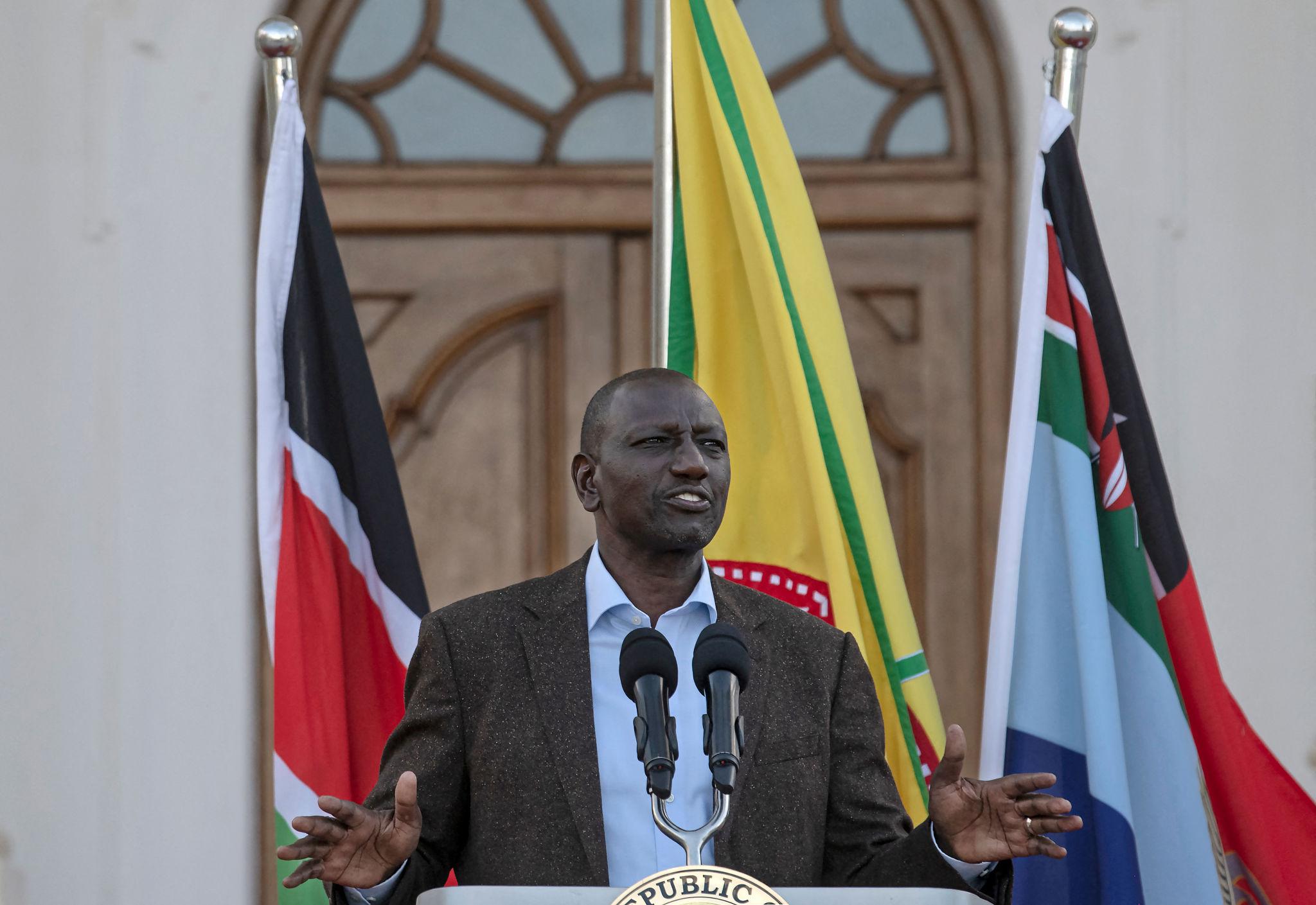
After all, William Ruto is the patron of the Kenya Hospital Association—the entity that owns Nairobi Hospital.
But here is where clarity matters.
A patron is ceremonial.
Symbolic.
Honorary.
Not executive.
Not operational.
Not controlling.
A patron can bless an institution—but cannot run it.
Under constitutional and corporate governance principles, institutions like Nairobi Hospital are governed by their boards—not by political office holders, no matter how powerful.
The Allegations That Shift the Ground
According to opposition claims—citing reports said to be confirmed by Citizen TV Kenya—a meeting allegedly took place.
The hospital chair was reportedly summoned.
And then came the request:
Allocate around seven board positions—enough to create a controlling majority aligned with William Ruto and Felix Koskei.
If true, this is not a small matter.
It is not “a patron acting.”
It is something far more consequential:
Political interference in an independent institution.
Where Governance Meets Power
Institutions are built on rules.
Boards exist for a reason—to provide oversight, independence, and accountability.
When external influence begins to shape internal composition, the balance shifts.
And once that balance shifts, so does trust.
The strength of an institution is measured by how well it resists capture.
Because today it may be a hospital.
Tomorrow it could be a regulator.
Next, a court.
Then, an election body.
The Public Reaction
What has perhaps been most striking is not just the allegation, but the reaction.
Some voices have defended the move.
Others have dismissed concerns.
Some have gone further—normalizing the idea with phrases like “TUTAM.”
But this is where the public draws a line.
Kenyans understand institutions.
They understand that governance is not about who holds power—but how power is exercised.
When rule-bending becomes normal, rule-breaking becomes inevitable.
A Warning Wrapped in the Present
This controversy is not just about today.
It is about the trajectory.
If rules can be stretched now—
If influence can be justified now—
If interference can be normalized now—
Then what happens in five more years?
The future of governance is written in the habits of the present.
And that is why the concern is not abstract.
It is immediate. Personal. Real.
The Role of Whistleblowers and Critics
This situation might never have reached public attention without voices willing to raise it.
Among them, Rigathi Gachagua—a figure often labeled controversial, even divisive.
But labels can distract from substance.
Because, beyond rhetoric, he has consistently raised issues on:
- Governance failures in public institutions
- Economic pressures affecting ordinary citizens
- Alleged irregular deals and misuse of power
- The erosion of institutional independence
And not just for one community—but across sectors and concerns that affect the country at large.
You can question the messenger—but you cannot ignore the message.

A Changing Political Voice?
For years, Raila Amolo Odinga symbolized resistance—challenging authority, amplifying grievances, demanding accountability.
But politics evolves.
Voices shift.
Roles change.
New actors step into old spaces.
And now, a question quietly lingers:
Has the mantle of relentless scrutiny begun to move?
Not replaced—but shared, contested, redefined?
The Human Cost Behind the Headlines
Amid all this—legal battles, political accusations, governance debates—it is easy to forget the human side.
Patients who rely on Nairobi Hospital.
Staff who depend on its stability.
Families who trust it with their lives.
For them, this is not theory.
It is reality.
When institutions shake, it is ordinary people who feel the tremors first.
A Line Worth Remembering
Hands that heal must never become hands controlled by power.
The Core Question
Strip away the politics. The personalities. The narratives.
And one question remains:
Who should control institutions—the law, or power?
Because the answer to that question defines everything else.
The Final Reflection
The Nairobi Hospital story is not finished.
The case may have been withdrawn, but the issues remain alive.
Governance.
Accountability.
Independence.
Integrity.
And above all:
Trust.
Because once people begin to believe that institutions can be influenced at will, something deeper breaks.
Not just confidence in a hospital.
But confidence in the system itself.
A nation does not lose its way all at once—it loses it when lines are crossed, then quietly erased.
And today, Kenyans are watching closely—
Not just what is being done…
But what is being normalized.
