




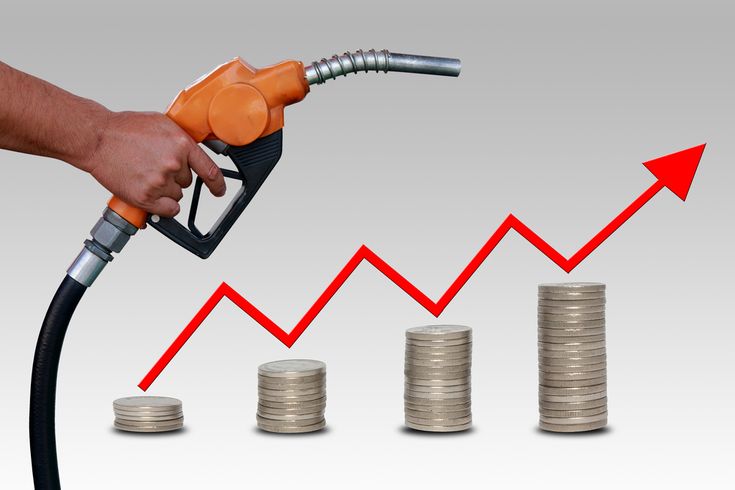
WHEN “MIDDLE-INCOME” DOESN’T FEEL LIKE PROGRESS


There are words governments use that sound like progress.
“Middle-income country.”
It carries a certain weight—an image of growth, stability, and upward movement. It suggests a nation stepping into a better future, where systems work, opportunities expand, and citizens begin to feel the benefits of development in their everyday lives.
But for many Kenyans, that phrase feels disconnected from reality.
Because when you step outside the language of policy and into the rhythm of daily life—
into matatu fares, market prices, and household budgets—
one question keeps surfacing:
If we are truly progressing, why does it feel like survival is getting harder?
THE CLAIM VS THE LIVED REALITY
When William Ruto suggests that higher fuel prices are justified because Kenya is a middle-income country, the implication is clear:
That higher costs are part of economic advancement.
But that logic has a critical flaw.
Income classification is not a reward system for governments.
It is a measurement of how well people are actually living.
And if that classification is real—if it means anything at all—then it should show up in:
- improved public services
- stronger economic stability
- increased disposable income
- and a reduced cost of living burden
Not the opposite.
WHAT REALLY DRIVES FUEL PRICES
Fuel prices are not abstract.
They are built—deliberately—through:
- taxes
- levies
- regulatory decisions
- and policy choices
This means one thing:
They are controllable.
When fuel prices rise, it is not because a country has been labeled “middle-income.”
It is because of decisions made within its economic framework.
And those decisions carry consequences.
THE DOMINO EFFECT OF FUEL COSTS
Fuel is not just another commodity.
It is the engine of the economy.
When fuel prices increase, the impact is immediate—and widespread:
- Transport costs go up
- Food prices rise due to higher logistics expenses
- Small businesses struggle with operational costs
- Essential goods become more expensive
What begins at the fuel pump ends at the dinner table.
And for ordinary Kenyans, this doesn’t feel like a statistic.
It feels like:
- buying less with the same income
- making harder choices at the market
- stretching already thin budgets
WHEN CLASSIFICATION DOESN’T MATCH CONDITIONS
The idea of being a middle-income country should signal progress.
But progress is not defined by labels.
It is defined by experience.
Do people feel:
- more secure?
- more supported?
- more economically stable?
Or do they feel:
- squeezed
- overburdened
- and increasingly uncertain?
Because a classification that raises expectations without delivering tangible benefits does more than disappoint—
It erodes trust.
THE MISUSE OF ECONOMIC NARRATIVES
There is a subtle danger in how economic language is used.
When terms like “middle-income” are used to justify higher costs, they shift the conversation away from accountability.
They suggest inevitability—
as if citizens must simply accept rising expenses as part of national growth.
But growth without relief is not progress.
It is pressure.
WHAT SHOULD “MIDDLE-INCOME” MEAN?
If Kenya is to truly embrace that status, then it must reflect in:
1. Efficiency
Stronger systems that reduce waste and unnecessary costs.
2. Institutional Strength
Transparent, accountable governance that prioritizes citizens.
3. Consumer Relief
Policies that cushion—not compound—the financial strain on households.
Because advancement is not measured by how much people can endure.
It is measured by how much easier life becomes.
THE HUMAN SIDE OF POLICY
Behind every policy decision is a person affected by it.
A driver calculating fuel against daily earnings.
A parent adjusting the grocery list.
A small business owner deciding whether to raise prices or absorb losses.
These are not abstract economic units.
They are lives.
And when policies increase costs without increasing capacity, the burden does not disappear.
It shifts—onto the people least able to carry it.
FINAL THOUGHT: PROGRESS MUST BE FELT, NOT JUST DECLARED
Economic labels can shape narratives.
But they cannot replace reality.
If Kenya is truly moving forward, then that progress must be visible not just in reports, but in:
- affordability
- opportunity
- and everyday living conditions
Because the true measure of a nation is not what it calls itself—
But how its people live.
And right now, for many Kenyans, the question remains:
If this is what “middle-income” feels like…
who is it really working for?


