





There are moments in a country’s life when something shifts—quietly, almost imperceptibly at first. Not with the loud bang of revolution, but with the steady murmur of citizens beginning to see more clearly, to question more deeply, and to feel more intensely the weight of what has been lost… and what could still be reclaimed.
What unfolded in Nakuru was one of those moments.
It wasn’t just another political rally. It wasn’t the usual exchange of promises dressed in applause. It felt—by many accounts—like something more grounded, more urgent, more human. A confrontation not just with leadership, but with truth.
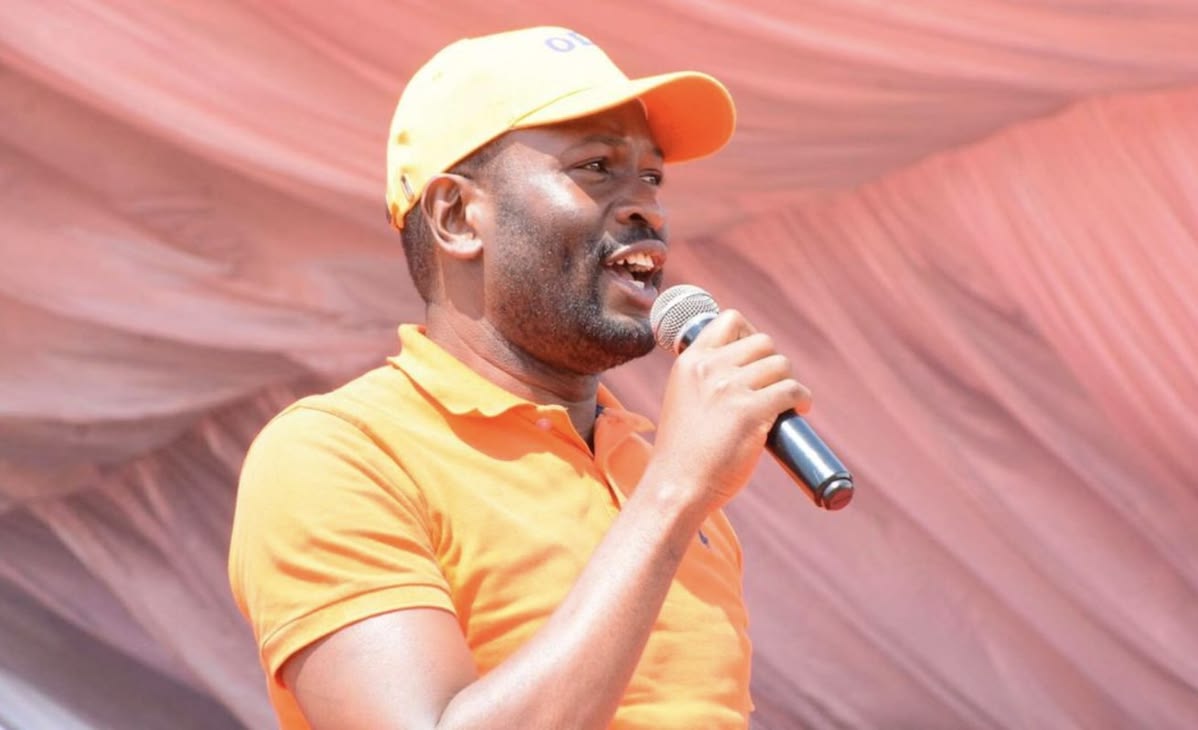
At the center of it stood Edwin Sifuna, who didn’t waste time decorating his message with empty optimism. Instead, he cut straight to the heart of a question that Kenya has been quietly wrestling with:
What is development, really?
Is it highways that stretch across counties while hospitals lack medicine?
Is it bridges and bypasses unveiled with fanfare while farmers struggle to afford fertilizer?
Is it the constant relaunching of projects—bigger, shinier, more expensive—while the ordinary Kenyan feels smaller, poorer, and more forgotten?
Sifuna’s argument was simple, but it carried weight: the problem isn’t the absence of projects. It’s the absence of balance, of humanity, of accountability. You can build roads across an entire nation, but if the systems that sustain life—healthcare, education, agriculture—are collapsing, then what you are building is not progress. It is illusion.
And then he did something even more significant—he anchored his critique in constitutionalism.
Not politics. Not personalities. The law.
He reminded Nakuru that development does not exist outside the Constitution. That true progress is not measured by how much is built, but by how it is built—and for whom. That when accountability is missing, even the most ambitious projects become monuments not of success, but of failure.
It was a shift from spectacle to substance.
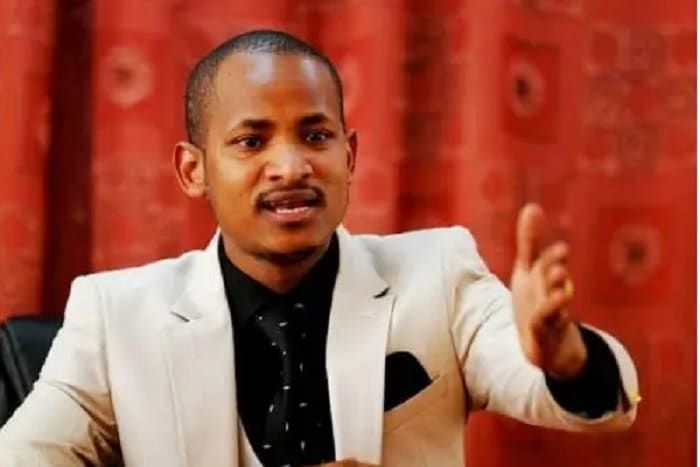
But if Sifuna set the tone, Babu Owino brought the emotion.
And with it, the reminder that behind every policy failure, there is a human story.
He spoke of Brian Odhiambo—a name that might have easily dissolved into statistics, into another line in a report, into another forgotten headline. A young life cut short, allegedly at the hands of those entrusted to protect it.
And then came the line that lingered in the air:
Brian Odhiambo will never walk on the Rironi–Mau Summit road.
It was a simple statement, but devastating in its truth.
Because what is the value of infrastructure to someone who is no longer alive to use it?
What is the meaning of development when it cannot protect life itself?
In that moment, the conversation shifted again—from policy to pain. From systems to souls.
And when Babu Owino gave space to Brian’s mother—when her grief was acknowledged, not hidden, not politicized, but honored—it became something deeper than politics. It became a mirror held up to the nation.
A question asked without words:

Who is development really for?
Because as much as roads are built in counties like Nakuru, the people who live there often remain spectators. They are not the contractors. Not the suppliers. Not even the laborers. They watch progress pass them by—literally—without ever touching their lives.
That is the quiet injustice that statistics never capture.
The rally’s message, often framed under the call to “Linda Mwananchi” (protect the citizen), resonated not because it was new, but because it felt honest. It spoke to a growing fatigue among Kenyans—a weariness with grand narratives that do not translate into lived reality.
But even in that moment of clarity, there was also a caution.
Because history has taught Kenyans something difficult but necessary:
Those who speak against injustice today can become its architects tomorrow.
And that is why the unspoken hope woven through Nakuru was not just about change—but about consistency.
That if power shifts, principles must not.
That those who stand with victims of police brutality today must still stand there when they are in office. That Linda Mwananchi must not become just another slogan swallowed by the machinery of power.
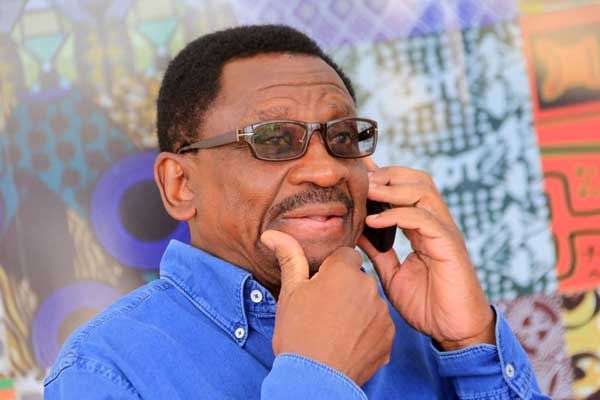
Then came James Orengo—measured, sharp, and unafraid to stir old wounds that never truly healed.
He reached back into Kenya’s political memory, reminding the country that even the death of Jaramogi Oginga Odinga—a man many consider a pillar of democratic struggle—still carries unanswered questions.
It was not just a historical reference. It was a warning.
Because nations that do not confront their past often repeat it.
And in declaring himself acting party leader of ODM, Orengo signaled something else—an internal shift, a recalibration of power, a possible redefinition of the opposition’s direction.
Taken together, the voices in Nakuru were not perfectly aligned in tone, but they converged on a single, powerful idea:
Kenya must choose what kind of progress it believes in.
One built on optics—or one rooted in justice.
One driven by announcements—or one sustained by accountability.
One that prioritizes structures—or one that protects people.
“Waendelee kuweka mawe,” they said—let them continue laying stones.
But perhaps the deeper message is this:
Stones alone do not build a nation.
People do.
Their dignity.
Their safety.
Their inclusion.
Their trust.
And if those are missing, then even the most impressive skyline is nothing more than a beautiful disguise for a broken system.
What Nakuru revealed was not just frustration—it was awakening.
A growing insistence that Kenyans are no longer content to admire development from a distance. They want to live it. To feel it. To benefit from it.
And most importantly, to survive it.
Because in the end, the true measure of leadership is not what is built…
…but who is still standing to see it.


