

When the Cost of Living Becomes the Cost of Survival


There is a moment when numbers stop being statistics…
and start becoming pain.
Fuel has crossed KSh 200 per litre again.
Diesel—by far the most important fuel in the economy—has jumped by KSh 40 in a single cycle.
That is not a normal adjustment.
That is a shock.
And shocks like this do not stay at the petrol station.
They travel—fast—into every corner of life.
Diesel Is Not Just Fuel. It Is the Economy.
Diesel powers:
- Transport
- Farming
- Manufacturing
- Food distribution
When diesel rises, everything rises.
The matatu fare goes up.
The price of unga follows.
Farm inputs become more expensive.
Small businesses tighten margins—or collapse.
And almost immediately, the burden lands on the same place it always does:
Ordinary households.
The Question Kenyans Are Asking
Parliament recently passed a supplementary budget.
So people are asking a simple question:
Why was there no meaningful cushion?
Why:
- No fuel subsidy?
- No serious VAT removal?
- No decisive intervention?
Instead, what exists are marginal adjustments that barely touch the real cost.
A 3% reduction in VAT in the face of a KSh 40 increase is not relief.
It is optics.


Are We Buying Fuel—Or Taxes?
Break it down, and the numbers become even more unsettling.
- Estimated landing cost: ~KSh 50
- Pump price: ~KSh 206
That means roughly KSh 150+ is taxes and levies.
So the question becomes unavoidable:
Are Kenyans paying for fuel—or paying for government?
Because when taxes form the majority of the price, fuel stops being a commodity.
It becomes a revenue tool.
The G-to-G Promise vs Reality
The government introduced the G-to-G (Government-to-Government) fuel deal with a clear promise:
- Stabilize prices
- Shield Kenyans from global shocks
- Ensure steady supply
But today, that promise is under serious scrutiny.
Because:
- Prices have surged dramatically
- Supply inconsistencies have been reported
- And the cost burden on citizens has increased
Even more troubling is the contradiction:
Officials previously argued that fuel imported outside G-to-G would raise prices by around KSh 14.
Now, fuel within G-to-G has increased by nearly KSh 40.
So which version is true?
Because both cannot be.
Global Factors—But Local Amplification
Yes, global events matter.
Tensions in the Middle East, including disruptions around the Strait of Hormuz, have:
- Increased shipping costs
- Raised insurance premiums
- Tightened global supply
Even neighboring countries like Tanzania and Rwanda have adjusted fuel prices upward.
But here’s the difference:
Kenya’s prices remain higher.
Why?
Because of heavier taxation and policy choices.
Global shocks may explain part of the increase.
But they do not explain everything.
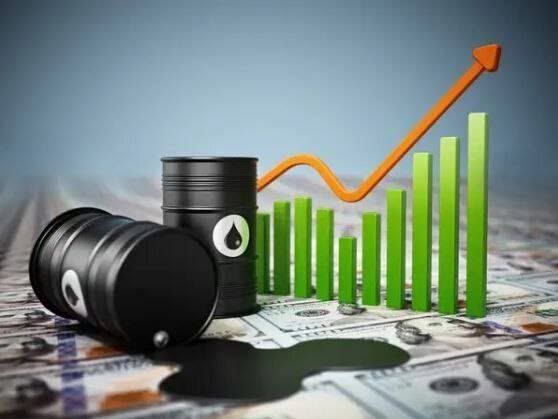

Policy-Induced Pain
This is where the issue becomes more serious.
A KSh 40 diesel increase in one cycle is not just a market reaction.
It is a sign of:
- Weak price stabilization mechanisms
- Aggressive fiscal extraction
- Poor regulatory calibration
In economic terms, this triggers cost-push inflation.
In human terms, it means:
- Less money for food
- Less savings
- More vulnerability
The Hidden Burden on Households
Fuel is only one part of the story.
Kenyans are already dealing with:
- Housing levy deductions
- SHIF contributions
- NSSF increases
- High PAYE taxation
Together, these have compressed disposable income.
And here’s the deeper issue:
Despite all these contributions, many still pay out-of-pocket for:
- Healthcare
- Education
- Basic services
This is what economists call a broken fiscal contract.
Citizens pay more…
…but receive less.
The Cost of Inconsistency
Leadership is tested not when things are easy—but when they are hard.
In 2022, rising fuel prices were blamed on global conflict.
At the time, that explanation was dismissed by current leadership as insufficient.
Today, fuel is even higher.
But the explanations are less clear.
Less direct.
Less accountable.
And that silence is being noticed.
When Decisions Become Expensive Mistakes
Consider the case of Oryx Energies:
- Approved to import fuel outside G-to-G
- Decision reversed mid-way
- Cargo already in transit
Now, Kenyans may pay KSh 3.6 billion in compensation.
That is not just a policy error.
That is a cost transferred directly to citizens.
Meanwhile, Spending Continues
At the same time, there are persistent concerns about:
- High government expenditure
- Luxury spending
- Lack of prioritization
This contrast is what fuels public anger.
Because the issue is not just scarcity.
It is allocation.
The Ripple Effects Are Already Here
The consequences are not theoretical.
They are immediate:
- Matatu fares are rising
- Food prices will follow
- Businesses will pass costs to consumers
And once inflation settles in, it is very difficult to reverse.
A Deeper Concern: Trust
At the heart of all this is something bigger than fuel.
It is trust.
Trust that:
- Policies are designed to protect citizens
- Taxes are used responsibly
- Leadership is acting in the public interest
When numbers stop adding up, trust begins to erode.
Final Reflection: A Country at a Crossroads
This is not just about fuel prices.
It is about direction.
A country can choose:
- To cushion its people in hard times
Or
- To extract more from them
But it cannot do both without consequence.
Because when the cost of living becomes unbearable,
and the explanations stop making sense,
people begin to ask harder questions.
And those questions do not disappear.
They grow.
Fuel at KSh 200 is not just an economic statistic.
It is a signal.
A signal that something in the system is not working the way it should.
And until that is addressed,
the pressure will not just remain—
it will rise.
The pressure will increase.