






Kenya is often described as a land of potential.
But beneath its soil lies something deeper than potential wealth.
Gold that glitters in Migori.
Titanium sands stretch along Kwale’s coast.
Rare earth minerals buried in Mrima Hill.
Soda ash crystallizing in Lake Magadi.
A country sitting on a treasure.
And yet, somehow, still struggling to translate that treasure into prosperity.
Kenya is not poor in resources—it is poor in conversion.
The Inventory of Hidden Wealth
Kenya’s mineral map reads like a catalogue of global demand.
Key Confirmed Minerals
- Gold – Migori, Kakamega, Narok
- Titanium (ilmenite, rutile, zircon) – Kwale (among world-class deposits)
- Soda ash – Lake Magadi (≈360,000 tonnes annually)
- Fluorspar, limestone, salt, barite
- Manganese, zinc, copper
Strategic & High-Value Minerals
- Rare earth elements – Mrima Hill (globally significant deposits)
- Niobium, thorium, coltan, lithium (emerging discoveries)
- Coal and oil deposits (Turkana region)
Estimated & Speculative Wealth
- Gold deposits valued at over $6 billion
- Rare earth output potential of 2,900–3,600 tonnes annually
- Over 970 mineral occurrences have been identified nationwide
And yet…
Mining contributes only about 1% of Kenya’s GDP.
The Companies Digging the Wealth
Kenya’s mining sector is not empty.
But it is dominated by a mix of foreign firms and a few local players:
- Base Titanium – Titanium mining (largest operation)
- Acacia Mining – Gold extraction
- JSW Steel East Africa – Manganese
- Mayfox Mining – Indigenous gold mining
- Athi River Mining (ARM) – Industrial minerals
But here is the uncomfortable layer beneath the list:
Mining licenses often sit at the intersection of business and power.
There have long been whispers—sometimes allegations—of:
- Proxy ownership structures
- Political connections influencing licensing
- Strategic minerals quietly controlled through networks of influence
Not always proven.
Not always documented publicly.
But persistent enough to shape perception.
Why Foreign Firms Dominate
This is not accidental.
Mining is expensive.
Exploration alone costs millions.
Extraction requires heavy machinery, technology, and expertise.
Processing demands infrastructure Kenya often lacks.
Foreign firms bring:
- Capital
- Technology
- Technical expertise
And so Kenya trades ownership for access.
We own the land—but they own the tools to unlock it.
The Raw Export Problem
Perhaps the biggest paradox lies here:
Kenya exports raw minerals.
Gold is exported unrefined.
Titanium is shipped as concentrate.
Rare earths leave before processing.
Why?
Because value addition is missing.
Refining plants are limited.
Industrial capacity is weak.
Energy costs are high.
And so:
We sell stones—and buy back finished products at ten times the price.
Gold: The Shadow Economy
Gold in Kenya carries a deeper, more complex story.
Officially:
- Gold is mined in western Kenya
- It contributes to exports and local economies
Unofficially:
There are persistent claims that Kenya acts as a transit hub for gold from:
- Democratic Republic of Congo (DRC)
- Sudan
Smuggled gold enters, is rebranded, and exported through Kenyan channels.
This creates:
- Revenue leakages
- Weak traceability
- International scrutiny
Not all gold exported from Kenya is mined in Kenya.
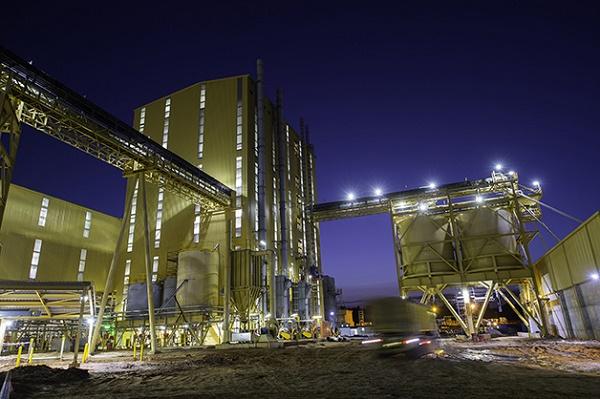

Policies: Strong on Paper, Weak in Practice
Kenya has made efforts:
- Mining Act reforms
- Strategic minerals designation
- Licensing frameworks
But implementation remains uneven.
Challenges include:
- Bureaucracy
- Regulatory overlap
- Weak enforcement
- Lack of transparency
Policy without enforcement is just paperwork.
Why the Sector Remains Underutilized
Despite all the wealth, several barriers persist:
1. Historical Neglect
Kenya was long seen as an agricultural economy, not a mining one.
2. Data Gaps
Large portions of mineral reserves remain unexplored.
3. Infrastructure Deficits
Mining requires roads, power, and rail—often lacking.
4. Capital Constraints
Local investors cannot easily finance large-scale mining.
5. Governance Concerns
Licensing opacity and political interference deter serious investors.
Who Really Benefits?
Mining does create:
- Jobs
- Local infrastructure
- Export revenue
But the scale is small compared to the potential.
The bigger gains often go to:
- Foreign companies
- Export markets
- Intermediaries
Meanwhile, local communities sometimes remain:
- Undercompensated
- Environmentally exposed
- Economically excluded
The land gives—but the system decides who receives.
The Deeper Question
Kenya’s mineral story is not about discovery.
It is about conversion.
Why does a country with:
- Gold
- Rare earths
- Titanium
- Oil potential
Still struggling to industrialize through them?
A Line Worth Remembering
A nation is not rich because of what lies beneath it—but because of what it builds from it.
The Way Forward
If Kenya is to unlock its mineral wealth:
- Invest in local refining and processing
- Strengthen transparency in licensing
- Build infrastructure for mining zones
- Empower local investors and communities
- Enforce traceability in mineral exports
Final Reflection
Kenya stands at a crossroads.
It can remain a supplier of raw materials—
or become a producer of value.
Because in the end:
The tragedy is not that Kenya lacks minerals—
the tragedy is that minerals leave Kenya before their value is realized.
And until that changes,
the wealth beneath our feet will continue to feel like a story we tell—
instead of a future we live.


